
Transylvania is certainly the best-known region of Romania, and is also known as Transylvania. Here you will find numerous sights and natural sites. But let’s be honest, don’t you think of Dracula first when you hear the word Transylvania? So it’s no wonder that tourists & travellers from all over the world still follow the traces of Dracula and other scary stories in Transylvania today. Even though Dracula and vampires are omnipresent almost everywhere in Romania and especially in Transylvania, in some places you can still literally feel Dracula or look him directly in the eye, for example when you look at his statue in thecity of Sighisoara.
In Dracula´s footsteps in Romania
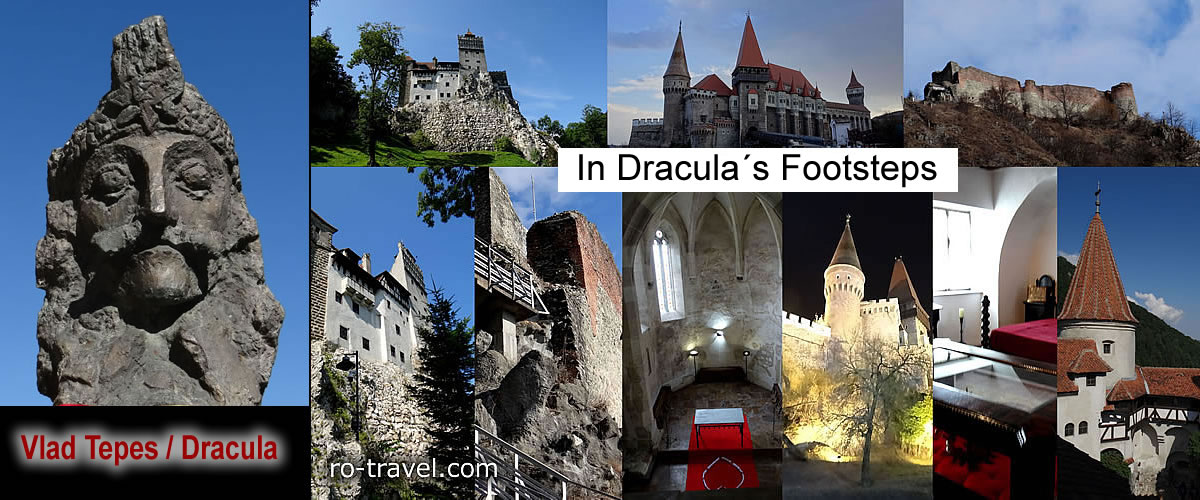
Vlad III. Tepes / Drăculea
In Dracula´s Footsteps
Bran Castle

I think Bran Castle (Castelul Bran) is the most popular Dracula castle in Romania. It is visited by tourists from all over the world, so it’s best to arrive early in the morning to avoid long lines.
Location: Strada General Traian Moșoiu 24, Bran
Poenari Fortress

Poenari Fortress (Cetatea Poenari) is located in the Argeș region. It is only a ruin, but it offers a fantastic view of the surroundings. It is also certain that Vlad III the Impaler stayed here in the 15th century.
Location: Transfăgărășan, Arefu
Birthplace of Vlad III

One of the most photographed signs in Transylvania is probably the one at the birthplace of Vlad III (Casa Vlad Tepes), located in the historic center of the town of Sighisoara.
Location: Strada Cositorarilor 5, Sighișoara
Who or what is Dracula?
Did he really exist? For centuries, dark legends have surrounded Dracula and the figure of the vampire. While Dracula and vampires are considered fictional characters in literature, belief in their existence remains alive in many parts of the world. Clear evidence is lacking, yet the stories persist.
It is precisely this mix of myth, history, and uncertain truth that gives Dracula his eerie fascination. Deeply rooted in the memory of many, tales of bloodsucking creatures still send chills down the spine today. It’s no wonder that travelers from all over the world come to Romania to follow in Dracula’s footsteps, seeking places where legends come to life and the line between reality and myth seems to blur.
Traces of Dracula (Vlad III. Tepes) in Romania
Many historical sites, such as Bran Castle (Castelul Bran), Poenari Fortress (Cetatea Poenari), and the Chindia Tower of the former princely palace in Targoviște, are often associated with Dracula. Today, they invite visitors to explore the history, legends, and life of the infamous Prince Vlad III Tepes.


Vlad III Tepes: The Man Behind the Dracula Myth
In many places throughout Transylvania, traces of Vlad III Tepes, the historical ruler who inspired Bram Stoker’s famous character Dracula, can still be found today. His cruel methods and bloody punishments are said to have influenced the writer, inspiring the creation of the vampire figure and its insatiable thirst for blood.
Corvin Castle (Castelul Corvinilor)

Corvin Castle (Castelul Corvinilor) in Hunedoara is, in my opinion, the most impressive of the Dracula-related castles in Romania. Vlad III is said to have been held as a prisoner in the dungeons of the fortress.
Location: Curtea Corvineștilor 1-3, Hunedoara
Which is the real Dracula Castle? This question is still debated today.
Poenari Fortress (Cetatea Poenari), rebuilt as a fortress by Vlad III Tepes, played a central role during his reign. According to legend, his wife threw herself from its walls upon learning of her husband’s death.
Bran Castle (Castelul Bran) is often associated with the Dracula legend, but there is no conclusive evidence that Vlad Tepes ever lived there, although he may have visited it in the 15th century.
Hunedoara Castle (Corvin Castle) is also linked to Vlad Tepes, as he is said to have been held there during his imprisonment.
Dracula Tours
Dracula tours have become a popular tourist attraction in Romania, highlighting the country’s close connection to the famous myth. The historical prince Vlad III Tepes, who inspired Bram Stoker’s fictional character Count Dracula, left numerous traces throughout Romania that are closely linked to the Dracula legend. Born in the Transylvanian town of Sighisoara, Vlad Tepes is said to have found his final resting place at or near Snagov Monastery (Manastirea Snagov). He is also believed to have visited Poenari Fortress (Cetatea Poenari), Bran Castle (Castelul Bran), and Hunedoara Castle (Corvin Castle). Another notable site is the Chindia Tower of the former princely palace in Targoviste.
Legends and Tales
Romania is full of myths and legends, especially the famous vampire story and the legend of Dracula.


